 Ducoffs.com
Tokyo is one of the most exciting cities in the world, and it is also one of the easiest to visit. It is safe, spotlessly clean, and has a public transport system that works like clockwork. The challenge for first-timers is not getting around; it is choosing where to start.
This guide covers the practical side of planning your first trip: flights, airports, neighborhoods, and the best times of year to go.
Haneda or Narita?
Tokyo has two international airports. Haneda (HND) is much closer to the city center, about 30 minutes by train or taxi. Narita (NRT) is farther out, roughly an hour or more by express train. When prices are similar, choose Haneda.
Compare both on routes like Los Angeles to Tokyo Haneda, Los Angeles to Tokyo Narita, Chicago to Tokyo, Dallas to Tokyo, and New York to Tokyo.
Flying to Tokyo from the U.S.
Nonstop flights from the West Coast take around 11 to 12 hours, and from the East Coast around 14. Los Angeles has the most choice of airlines and times, so it often has the best fares. Dallas, Chicago, and New York also have nonstop service.
The cheapest times to fly are usually January to early March and again from June to early July, outside Japan's Golden Week holiday at the start of May.
Where to stay
Tokyo is huge, so staying close to a major train line saves a lot of time. For a first visit, these areas work best.
- Shinjuku: lively, central, and on many train lines; great for nightlife and food
- Shibuya: young and energetic, close to Harajuku and Omotesando shopping
- Ginza and Marunouchi: polished and upscale, close to Tokyo Station for bullet trains
- Asakusa: traditional and more affordable, near Senso-ji temple
- Roppongi: international dining and nightlife, home to several luxury hotels
Standout hotels
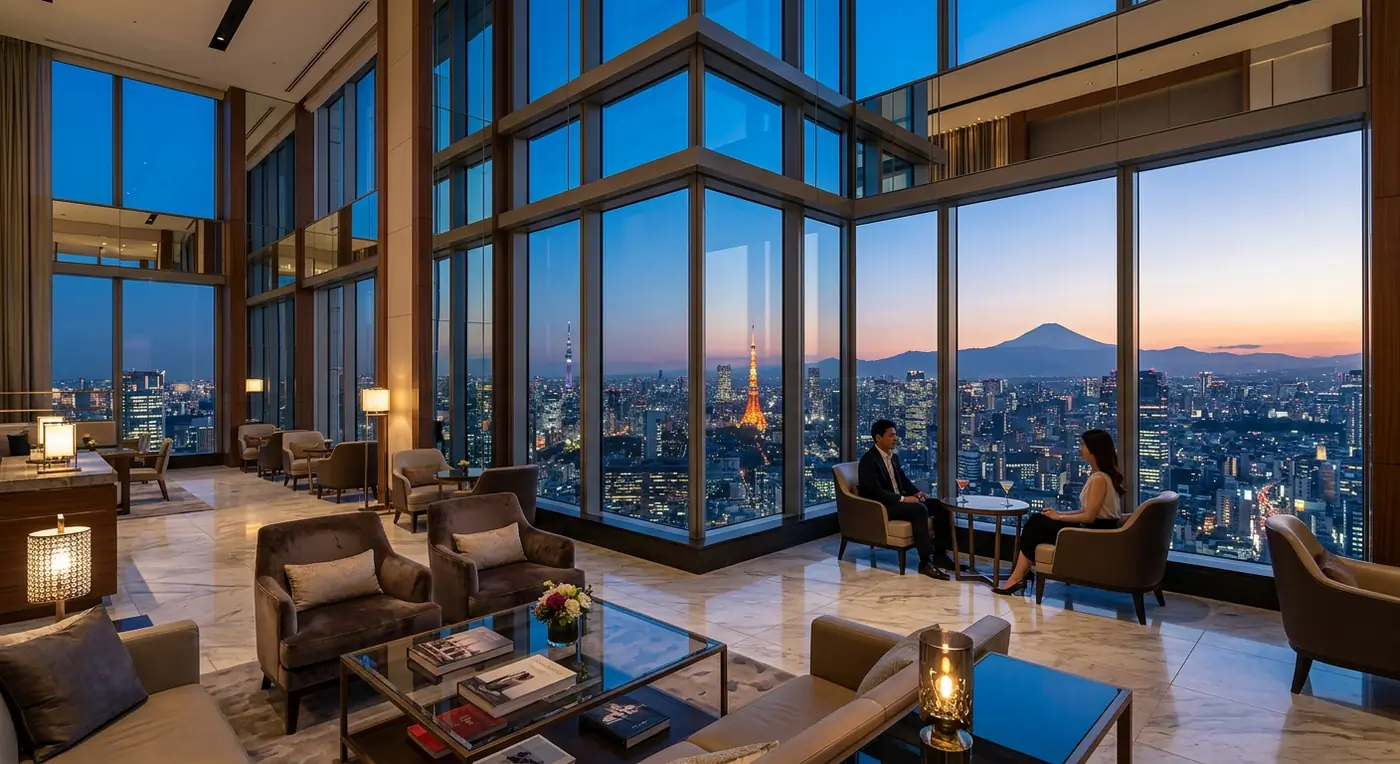
The Ritz-Carlton, Tokyo occupies the top floors of Tokyo Midtown in Roppongi, with sweeping views that on a clear day reach to Mount Fuji. For something more affordable and artistic, Park Hotel Tokyo in Shiodome has rooms designed by local artists and a great location near Ginza.
Japanese hotel rooms are often smaller than American ones. If space matters, check the room size in square meters before booking. Around 25 square meters is comfortable for two people.
When to go
Spring, from late March to early April, is cherry blossom season and the most famous time to visit, but also the busiest and priciest. Autumn, from late October to late November, brings colorful leaves, comfortable weather, and smaller crowds. Winter is cold but clear and is one of the cheapest times to visit.
Summer, from July to August, is hot and humid, but it is also festival season, with fireworks and street festivals across the city.
Getting around
Buy a rechargeable transit card, such as Suica or Pasmo, which you can add to your phone's wallet. It works on almost every train, subway, and bus, and in many shops. Trains stop running around midnight, so plan late nights accordingly.
If you plan day trips to Kyoto, Osaka, or Hiroshima, check whether a rail pass is worth it for your itinerary. For just one round trip to Kyoto, single tickets are often cheaper.
Adding a second city
Many first-timers combine Tokyo with Kyoto, which is about two and a half hours away by bullet train. A good plan is to fly into Tokyo and home from Osaka, which is close to Kyoto. Compare Los Angeles to Osaka for the return leg. Seoul is also a short flight from Tokyo; see Los Angeles to Seoul.
For a ten-day trip, a common split is five nights in Tokyo, four in Kyoto, and one in Osaka. Our guide to stretching your vacation days can help you find the time.